
Fibroids are very common, non-cancerous growths that develop in the uterus, especially during a woman’s reproductive years. Many women with fibroids have no symptoms and may not even know they have them. However, some may experience heavy periods, pelvic pain, or pressure depending on the size and location of the fibroids. The good news is that fibroids are manageable, and a range of safe and effective treatment options are available when needed.
Understanding Fibroids (For Patients)
- Fibroids are non-cancerous growths that develop in the uterus. They are also called uterine fibroids or leiomyomas.
- Fibroids are very common in women of reproductive age.
- Many women may have fibroids without even knowing it.
- The exact cause is not fully known, but hormones play a role. Estrogen and progesterone can stimulate fibroid growth.
- Fibroids can vary in size from very small to very large.
- Some women may have a single fibroid, while others have many. Common symptoms include heavy menstrual bleeding.
- Some women may experience pelvic pain or pressure.
- Frequent urination can occur if fibroids press on the bladder. Constipation may occur if they press on the bowel.
- Fibroids can sometimes affect fertility.
- They may also cause complications during pregnancy in some cases.
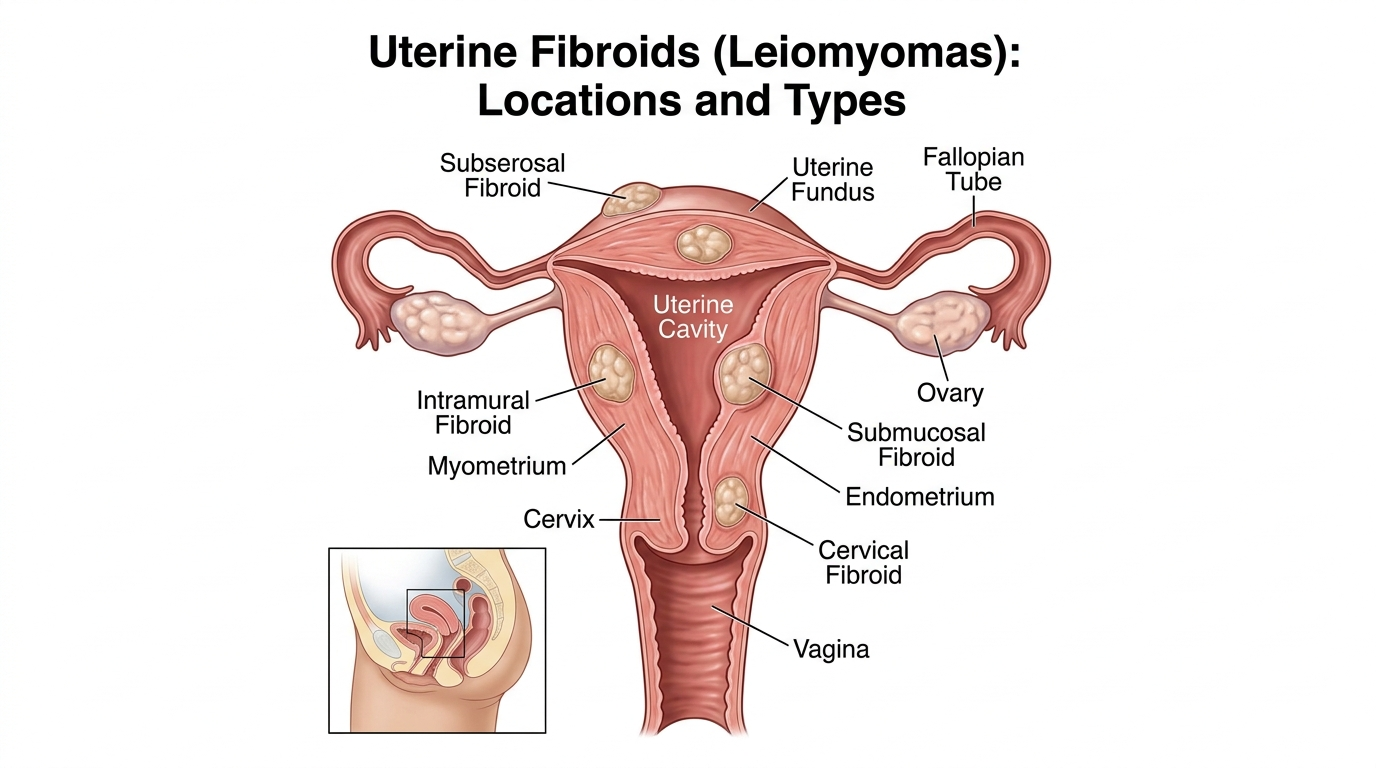
- Diagnosis is usually done through ultrasound
- Treatment depends on symptoms, size, and patient
preference. - Many fibroids do not need treatment if they are not causing problems
- Medicines can help control symptoms. Surgical options include myomectomy or hysterectomy.
- Minimally invasive treatments are also available.
- Lifestyle and regular follow-up are important.
- Not all fibroids grow or worsen over time.
- Fibroids are not cancer and rarely turn into cancer.
- Early consultation helps in better management.
- Always consult your doctor for personalized advice.
Test Your Fibroid Awareness
Frequently Asked Questions (FAQs)
- What are fibroids?
- Fibroids are benign (non-cancerous) growths in the uterus.
- Are fibroids dangerous?
- Most fibroids are harmless, but large ones may cause symptoms.
- Do fibroids cause cancer?
- No, fibroids rarely turn into cancer.
- What causes fibroids?
- Hormones (estrogen, progesterone) and genetics are involved.
- What are common symptoms?
- Heavy periods, pain, pressure, bloating, frequent urination.
- Can fibroids cause infertility?
- Sometimes, depending on size and location.
- Can fibroids grow during pregnancy?
- Yes, due to hormonal changes.
- How are fibroids diagnosed?
- Usually by ultrasound or MRI.
- Do all fibroids need treatment?
- No, only symptomatic ones require treatment.
- Can fibroids shrink on their own?
- Yes, especially after menopause.
- What medicines are used?
- Hormonal therapy, pain relievers, and other medications.
- What is myomectomy?
- Surgery to remove fibroids while keeping the uterus.
- Are there non-surgical treatments?
- Yes, like uterine artery embolization.
- Can fibroids come back after treatment?
- Yes, especially after myomectomy.
- Can diet affect fibroids?
- Healthy diet may help but does not cure fibroids.
- Do fibroids cause weight gain?
- Large fibroids may increase abdominal size.
- Can exercise help?
- Exercise helps overall health but does not remove fibroids.
- When should I see a doctor?
- If you have heavy bleeding, pain, or fertility issues.
- Are fibroids common?
- Yes, very common in women aged 30–50 years.